.png)
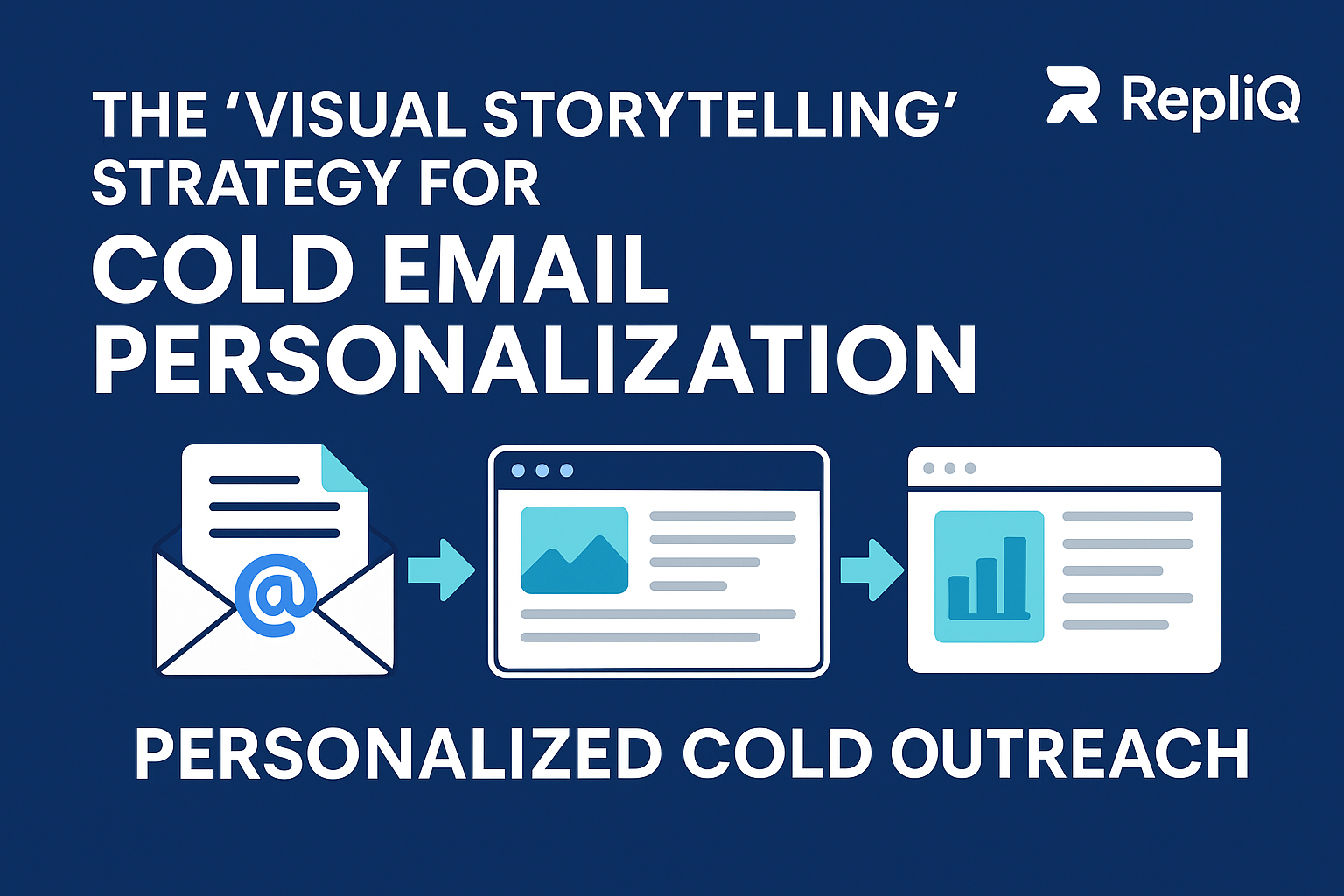
Visual Storytelling Outreach: The Scalable Blueprint for Personalized Cold Emails That Feel Human
Table of Contents
- Introduction
- Why Generic Personalization Gets Ignored
- What Visual Storytelling Outreach Actually Looks Like
- Turning Prospect Research Into a Narrative and Visual Hook
- Scaling Personalized Images and Sales Pages With AI
- When Visual Storytelling Beats Merge Fields or Custom Video
- Tools, Workflow, and Measurement Tips
- Conclusion
- FAQ
Introduction
Most “personalized” cold emails are still ignored because first-name variables and generic compliments do not create immediate relevance. Dropping a prospect's company name into a template might prove you have a functioning CRM, but it does not prove you understand their business. When inboxes are flooded with automated text, prospects rely on rapid pattern recognition to filter out noise, meaning your outreach must immediately signal genuine value to survive the first three seconds of attention.
There is a better alternative: visual storytelling outreach. This approach combines prospect context, a personalized visual hook, and a post-click experience that continues the same narrative. This guide is designed for outbound teams and growth marketers who already understand cold email basics but need a more scalable way to improve engagement and reply rates.
Visual storytelling outreach represents the highly effective middle ground between shallow merge-field personalization and time-heavy custom video outreach. By utilizing RepliQ’s proven storytelling-based outreach systems, AI images, and personalized sales page workflows, sales teams can create hyper-personalized narratives at scale.
Why Generic Personalization Gets Ignored
Conventional personalization fails to stand out because "looking personalized" is vastly different from feeling relevant. The common pattern in B2B sales involves emails loaded with a first name, a company name, or a vague compliment about a recent LinkedIn post. Despite these variables, the email still reads as automated because it fails to reflect the recipient’s actual context, strategic goals, or daily priorities.
Prospects decide in seconds whether an email is worth their attention. If relevance is not obvious immediately, the email is deleted. This dynamic creates significant pain points for SDR teams and marketers: low email response rates, severe inbox fatigue, and the ongoing struggle to scale quality prospect engagement without writing every message from scratch.
Personalization works best when it feels genuinely relevant and tied to a prospect's reality. This is supported by research on perceived personal relevance in personalized messaging, which demonstrates that messages tailored to a user's specific context drive higher engagement. However, there is a necessary nuance: tailored communication can actually underperform if it feels forced, irrelevant, or manipulative. As evidence on when tailored messages are more persuasive highlights, personalization must align naturally with the recipient's expectations and needs. While typical text-only personalization advice focuses on scraping basic data points to fill in blanks, true cold email personalization requires a cohesive, relevant narrative.
The Difference Between Surface-Level Personalization and Real Relevance
Surface-level personalization relies strictly on merge fields and generic references. It operates on the assumption that seeing one's own name is enough to earn attention.
Real relevance, by contrast, shows the recipient that you actively understand their brand, their goals, their pain points, or their current market situation. Personalized narratives consistently outperform isolated personalization tokens because they speak to the "why" behind the outreach. A story-driven outreach approach connects a prospect's current friction to a tangible solution, making the interaction feel consultative rather than transactional.
Why Plain-Text Outreach Often Fails to Earn Attention Fast Enough
Plain text can absolutely be effective, but in crowded inboxes, it often demands too much attention before proving its relevance. A dense block of text forces the prospect to read, process, and evaluate the pitch simultaneously.
A visual cue reduces cognitive load and helps the reader "get it" significantly faster. When a prospect sees an image of their own website, a graph of their industry, or a flowchart of their specific funnel, their brain instantly registers the context. In this framework, visual storytelling acts as essential support for the narrative, not mere decoration. It accelerates comprehension, which is exactly how to improve cold email reply rates in highly competitive markets.
What Visual Storytelling Outreach Actually Looks Like
Visual storytelling outreach is a systematic approach where prospect insight is translated into a relevant visual asset, reinforced by narrative-led email copy, and continued through a personalized destination. This is not just image personalization for the sake of novelty; it is a structured communication strategy.
The methodology is built on three distinct layers: insight, a visual hook, and narrative continuity. Formats can range from AI-generated images and annotated screenshots to lightweight GIFs and personalized sales pages. For teams looking to implement this, exploring RepliQ’s broader outreach education and storytelling approach provides a foundational understanding of how to weave these elements together effectively.
The Three-Part Framework: Context, Visual, Continuity
- Context: This is what you know about the prospect and why it matters right now. It is the strategic foundation of personalized narratives.
- Visual: The personalized image or screenshot that makes the message instantly relevant. It acts as the anchor for the email.
- Continuity: The matching CTA, personalized landing pages for outbound, or sales page that extends the same story smoothly after the click.
Examples of Visual Storytelling Assets in Cold Outreach
Practical asset types make this strategy actionable. An outbound campaign might use a prospect's homepage screenshot with specific annotations pointing out a conversion gap. Other examples include an ad or funnel teardown snapshot, a before/after concept image, or a custom prospect-specific page preview.
The format should always match the recipient’s role and use case. A CMO might respond best to a brand-focused visual, while a technical lead might prefer an architecture diagram. By leveraging AI-generated personalized visuals, teams can create these assets efficiently without sacrificing the highly targeted nature of personalized image outreach.
Why This Feels More Human Than Automation-Heavy Outreach
Relevance creates perceived effort. When a prospect receives an email containing a visual specifically tailored to their business, they assume a human took the time to evaluate their needs.
The story matters more than the asset itself: the recipient should feel understood, not just targeted by a scraping tool. Hyper-personalized cold emails succeed when they build trust. Sales professionals must avoid gimmicks that add visuals without meaningful context; an image of a prospect's logo on a coffee mug does not solve a business problem, but an annotated screenshot of their pricing page does.
Turning Prospect Research Into a Narrative and Visual Hook
Moving from raw prospect data to an outreach story that feels specific and useful requires a repeatable process. Research should focus on publicly accessible, high-value signals: brand positioning, homepage messaging, product category, hiring signals, active campaigns, audience demographics, recent company changes, or visible operational gaps.
The key is to select one meaningful insight rather than stacking random details. Once identified, that insight is converted into a short narrative arc: what is happening now, what friction exists, and what better could look like. This narrative is then connected to a visual hook that the prospect can understand in seconds. Structuring this process around user context and intent aligns with NIST guidance on human-centered design, ensuring the end product is genuinely useful to the recipient.
What Prospect Data Points Make the Best Stories
The best personalized outreach prioritizes data that reveals context. Messaging gaps, campaign misalignment, funnel friction, brand inconsistencies, product positioning, or audience-specific opportunities are excellent triggers.
The most effective sales personalization inputs are those tied directly to business outcomes, not trivia. Noting that a prospect's company just secured funding is trivia; noting that their new funding aligns with a specific hiring push that your software can optimize is context. A single strong signal is always more powerful than five weak ones.
A Simple Narrative Arc for Cold Outreach
To keep story-driven outreach focused, introduce a simple 3-step arc into your cold email personalization:
- What the prospect is trying to achieve: Ground the email in their current reality.
- What appears broken, unclear, or under-optimized: Introduce the specific friction point.
- What a better outcome could look like: Present the solution naturally.
This structure keeps the email focused and useful. Brevity is vital; the message must stay light enough for cold outreach while still delivering impact.
Turning the Narrative Into a Visual Hook
Mapping the story into an image, screenshot, or mini asset requires strategic alignment. A strong visual hook must be immediately recognizable, role-relevant, easy to scan, and directly tied to the message.
If your narrative focuses on a website's slow load time, the visual hook should be a performance snapshot, not a generic team photo. The AI images for sales outreach should reinforce a point already introduced in the text, acting as a cognitive shortcut rather than replacing the clarity of the written word.
Writing the Email Around the Visual
The structure of the email should flow seamlessly around the visual element:
- Short opener grounded in context: Acknowledge their situation.
- One clear observation: State the friction point.
- The visual hook: Insert the personalized image outreach asset.
- A low-friction CTA: Ask a soft, interest-based question.
The copy must sound conversational and specific, never templated. Use the image to deepen relevance rather than attempting to oversell the product in the first touchpoint.
Scaling Personalized Images and Sales Pages With AI
The biggest practical objection to visual storytelling outreach is the fear of manual production bottlenecks. However, scale comes from robust systems, templates, and controlled AI assistance, not from automating creativity blindly.
Teams can use reusable narrative patterns, visual templates, and structured account inputs to generate personalized assets efficiently. Furthermore, connecting the email to a personalized sales page ensures the story continues seamlessly after the click. Automation must support relevance, not flatten it. When scaling, accessibility and comprehension remain paramount; teams should follow government guidance on designing content for understanding to ensure clarity. Additionally, implementing proper alt text, captions, and inclusive design is critical, as outlined in accessibility guidance for visual and content design.
What an AI-Assisted Workflow Can Automate Well
AI excels at specific, structured tasks within the sales personalization workflow:
- Research summarization of public company data.
- Asset generation from structured, compliant inputs.
- Template population for AI personalized images or landing pages.
- Generating reusable page personalization blocks.
AI works best when humans define the narrative logic first. It is a tool for multimodal outreach execution, not a replacement for strategic thinking.
How Personalized Sales Pages Extend the Story After the Click
A common post-click problem in outbound campaigns is the sudden drop in momentum when a generic landing page fails to match the email’s personalized promise.
A personalized sales page solves this by mirroring the exact insight, visual language, and CTA from the email. This continuity from the inbox to the destination creates a massive conversion advantage. Message match ensures that the prospect feels guided through a singular, cohesive narrative rather than being dumped into a generic marketing funnel.
How to Keep Scaled Personalization From Feeling Fake
Over-automation, generic AI outputs, and overly dramatic visuals are the enemies of trust. To prevent personalized outreach from feeling fake, teams must utilize strict QA checks for accuracy, tone, and contextual fit.
One wrong detail—such as an outdated company logo or an incorrect assumption about their tech stack—can destroy trust faster than no personalization at all. The risks of over-automation in personalized outreach are mitigated by keeping human oversight in the final review stages.
Operational Tips for Teams
To optimize outbound campaigns, batch accounts by segment or persona rather than building every asset from zero. Create a small library of narrative templates tied to common pain points within those segments.
Test different visual formats—image-first, screenshot-first, and page-first variations—by campaign type to see what resonates best with specific audiences. AI images for sales outreach should be iterated upon based on data, not just intuition.
When Visual Storytelling Beats Merge Fields or Custom Video
Visual storytelling is the practical middle ground between lightweight text personalization and high-effort bespoke content. Understanding the tradeoffs in speed, scalability, perceived effort, production complexity, and post-click continuity helps teams deploy the right tactic at the right time. This is a decision framework, not a blanket claim that one format always wins.
When Merge-Field Personalization Is Enough
Merge fields can still be highly effective for tightly segmented campaigns that possess exceptional offer-message fit. If you are emailing a highly specific list with a no-brainer offer, complex visuals may not be necessary. Not every list requires a custom visual; sometimes, clear, concise text is exactly what the prospect needs.
When Visual Storytelling Is the Better Choice
Visual storytelling outreach is the superior choice for higher-value accounts, noisy markets, brand-sensitive prospects, or complex offers that require rapid explanation.
It is a remarkably strong fit when context can be shown visually: a website teardown, a design issue, a product positioning gap, a campaign idea, or a custom concept. It is ideal when you need to project high perceived effort to secure prospect engagement without incurring video-level production costs.
When Custom Video Is Worth the Extra Effort
Video vs image personalization is a common debate. Custom video outreach often outperforms in late-stage outreach, very high-value ABM campaigns, complex technical demos, or deeply relationship-based selling.
However, the tradeoff in time and scale is significant. Visual storytelling should be viewed as complementary to video prospecting, serving as the scalable entry point that earns the right to send a custom video later in the sales cycle.
A Simple Comparison Framework for Teams
When evaluating sales outreach personalization tactics for reply-rate optimization, assess each format based on:
- Time required per prospect
- Overall scalability
- Context clarity (how fast the prospect understands the value)
- Personal feel and perceived effort
- Click-through path friction
- Post-click continuity
Choose your outbound workflows based on campaign economics and the potential lifetime value of the account.
Tools, Workflow, and Measurement Tips
Operationalizing this strategy requires a lightweight, compliant workflow that moves smoothly from research to asset creation, email sending, and post-click follow-up. Measuring the ROI of visual personalization in cold email means looking far beyond open rates.
A Repeatable Workflow for Outbound Teams
- Gather account context: Use compliant methods to identify public signals and friction points.
- Pick one narrative angle: Focus on the single most compelling insight.
- Generate the visual hook: Utilize tools to create AI-generated personalized visuals or annotated screenshots.
- Write the email around it: Craft a story-driven outreach message that supports the visual.
- Send to a matching personalized page: Ensure the CTA leads to a personalized sales page for continuity.
- Review outcomes and refine templates: Continuously optimize outbound systems based on data.
What Metrics Actually Matter
To accurately gauge prospect engagement, focus on metrics that indicate intent:
- Reply rate
- Positive reply rate (sentiment analysis)
- Click-through rate to personalized assets
- Time spent on personalized sales pages
- Meetings booked or pipeline influenced
Engagement quality matters significantly more than vanity metrics. A high open rate means nothing if the click-through rate and positive reply rate remain stagnant.
Common Mistakes to Avoid
Avoid these common cold outreach mistakes to protect your sender reputation and brand trust:
- Using visuals with no strategic message or narrative tie-in.
- Relying on overly generic AI-generated assets that look like stock photos.
- Including inaccurate or outdated prospect references.
- Pairing a strong visual with a weak, high-friction CTA.
- Providing a disconnected landing page experience that breaks post-click relevance.
Conclusion
Visual storytelling outreach works because it helps prospects feel understood significantly faster than generic, text-only personalization. By combining verified insight, an immediate visual hook, and a destination that continues the exact same story, outbound teams can cut through inbox noise effectively.
This system represents a highly scalable middle ground between shallow merge fields and expensive custom video production. To see the impact firsthand, audit one of your current outbound sequences today and identify exactly where a personalized visual or customized sales page could add immediate relevance. With RepliQ’s focus on storytelling-based outreach systems and end-to-end personalization workflows, transforming your cold email strategy into a human-centric, high-converting engine is entirely within reach.
FAQ
How does visual storytelling improve cold email personalization?
Visuals make relevance easier to grasp quickly. They reduce cognitive load, helping the recipient instantly connect your message to their own specific context, which prevents the email from feeling like a mass-automated blast.
What are examples of visual storytelling in outreach emails?
Common examples include annotated screenshots of a prospect's website, AI-generated branded visuals, custom concept mockups, performance graphs, and personalized sales page previews embedded directly in the email body.
How can personalized narratives increase reply rates?
Personalized narratives organize your personalization efforts around the prospect’s actual goals and friction points. Instead of just stating facts, a narrative makes the outreach feel thoughtful, consultative, and immediately useful, prompting higher engagement.
What tools help create personalized visuals for cold outreach?
Effective personalized outreach tools include AI image generators, screenshot annotation software, dynamic personalization platforms, and personalized page builders designed specifically to integrate with cold email sending tools.
How do you scale visual storytelling in outbound campaigns?
Scaling relies on systems rather than manual effort. Teams can scale storytelling-based personalization with AI by using dynamic visual templates, AI-assisted generation from structured data, repeatable narrative frameworks, and rigorous QA checks to maintain authenticity.

.svg)
.png)


.svg)